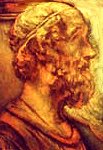
 Mentor was a confidant of Ulysses whose form Athene
 (goddess of wisdom) assumed when she accompanied
Telemachus in his search for his father.
Mentoring
I have developed this program as a tool for students to understand their feelings as they experience what it means to be a part of the health professions, yet it cannot be effective without someone with the initiative,experience and skills for the student to contact, confide in and seek advice, such as clerkship directors, program directors, faculty advisors or other experienced and willingprofessionals. The role of the Ephemeris Project Mentor is to be available from time to time by email or in person when a student at his or her institution is in need of advice or consoling when he or she encounters or is involved with a medical experience which is diffiuclt to process; i.e. patient death or unexpected outcome. Such mentoring will be certain to enhance the emotional and professional growth of that student, make him/her a more mindful and compassionate professional and promote better self-care for the student.
Mentor was a confidant of Ulysses whose form Athene
(goddess of wisdom) assumed when she accompanied
Telemachus in his search for his father.
"…I am part of all that I have met;
Yet, all experience is an arch wherethrough
Gleams that untraveled world whose margin fades
Forever and forever when I move.
How dull it is to pause, to make an end,
To rust unburnished, not to shine in use!
Alfred Lord Tennyson
Ulysses, 1842
In Reading Poems, Oxford University Press, 1941, p.248
"...a mentor is someone who takes a special interest in helping another person develop into a successful professional..." For Health Professional Students, this might be their clerkship director, program director or faculty advisor. They might also find their mentor elsewhere—perhaps a fellow student, another faculty member, a wise friend, or another person with experience who offers continuing guidance and support.